
Diplomatic Tensions Rise as Reports of Legal Action by Polish MEP Dominik Tarczyński Against UK Prime Minister Keir Starmer Spark Debate Over Free Movement, Political Speech, and UK–Poland Relations
Reports that Polish Member of the European Parliament Dominik Tarczyński is pursuing legal action following an alleged decision preventing him from entering the United Kingdom have rapidly become one of the most discussed political stories across social media and European political circles. The reports, which have generated widespread online debate, claim that Tarczyński intends to challenge the decision through legal channels while arguing that the restriction was politically motivated. At the time of writing, many of the details circulating online remain the subject of political claims and public discussion rather than fully established court findings. Nevertheless, the controversy has already expanded beyond the individuals involved, becoming a broader conversation about border controls, freedom of political expression, diplomatic relations, and the legal authority governments possess when deciding who may enter their territory. Whether viewed as a legitimate exercise of sovereign immigration powers or as a troubling political dispute between allies, the controversy has captured attention across Britain, Poland, and the wider European political landscape.
The dispute has emerged during a period in which immigration, national security, and international cooperation remain among the most sensitive issues facing governments across Europe. Since taking office, Prime Minister Keir Starmer’s government has repeatedly emphasized its intention to strengthen border security, reduce irregular migration, combat organized criminal smuggling networks, and modernize Britain’s immigration system. At the same time, Britain continues to maintain close diplomatic, economic, and defense relationships with European nations despite no longer being a member of the European Union. Any disagreement involving a high-profile European politician therefore attracts significant attention because it touches upon much larger questions regarding diplomacy, international law, and political cooperation.
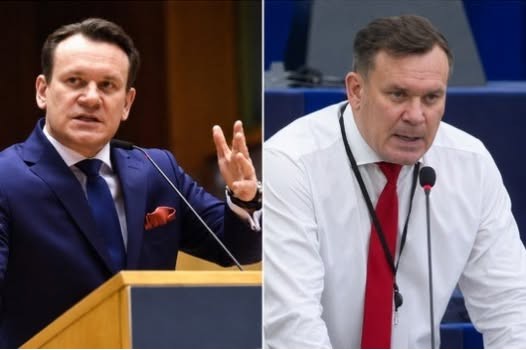
Dominik Tarczyński is widely known throughout European politics for his outspoken conservative positions on immigration, national sovereignty, cultural identity, and European Union policy. As a member of the European Parliament representing Poland, he has frequently attracted headlines through direct criticism of liberal immigration policies and by advocating stronger border enforcement throughout Europe. His speeches, interviews, and social media posts have often generated passionate support among those who favor stricter migration policies while simultaneously attracting criticism from political opponents who argue that some of his rhetoric is unnecessarily confrontational. Regardless of political opinion, few would dispute that he has become one of the more recognizable conservative voices within the European Parliament.
According to reports circulating in political media and online discussions, the controversy began after Tarczyński allegedly faced restrictions relating to entry into the United Kingdom. Supporters claim the move represents an unprecedented attempt to silence an elected European politician because of his political opinions. Critics of that interpretation argue that governments possess broad legal authority to make immigration and border decisions when they believe doing so serves the national interest or public safety. Because official details surrounding the matter remain limited in public reporting, much of the public debate has centered on competing political narratives rather than confirmed legal findings. As with many high-profile international disputes, careful distinction between verified facts, official government statements, and political claims remains essential.
The possibility of legal proceedings has further intensified public interest. If legal action is formally pursued, the dispute would likely involve complex questions regarding immigration law, administrative decision-making, human rights protections, and governmental discretion. Legal experts note that countries generally retain significant authority over determining who may enter their territory, particularly when foreign nationals are involved. However, those decisions may still be subject to judicial review depending upon the legal framework under which they are made. Courts examining such disputes typically consider whether decisions were lawful, proportionate, procedurally fair, and consistent with applicable domestic legislation as well as relevant international obligations.
Supporters of Tarczyński have framed the controversy as an issue extending far beyond one individual politician. They argue that elected representatives should be able to participate freely in public debate, attend political events, speak before audiences, and engage with supporters across democratic societies. In their view, restricting entry based primarily upon political opinion would raise significant concerns regarding democratic values and freedom of expression. They contend that disagreement with a politician’s views should be addressed through public debate rather than administrative restrictions, warning that governments must exercise exceptional caution whenever decisions risk creating the perception of political discrimination.
Others respond that every sovereign nation maintains the right to establish immigration rules governing foreign nationals regardless of their political status. Governments routinely refuse entry to individuals for various legal reasons, including immigration violations, public order concerns, national security assessments, or other grounds established under domestic legislation. Supporters of this perspective argue that sovereignty necessarily includes discretion over border control and that governments must retain flexibility when balancing competing public interests. They caution against assuming that any immigration decision involving a public figure automatically constitutes political censorship without first examining the complete legal reasoning behind the decision.
The controversy has also renewed discussion regarding the evolving relationship between Britain and the European Union following Brexit. Although Britain has left the EU, political, economic, and security cooperation between London and European capitals remains extensive. British and Polish cooperation extends across defense, intelligence sharing, NATO operations, trade, education, and support for Ukraine. Consequently, any public disagreement involving senior political figures naturally attracts diplomatic interest because both countries continue to share numerous strategic priorities despite differing political perspectives on some issues.
Observers have pointed out that Poland and the United Kingdom have developed particularly close defense cooperation in recent years. Both countries remain committed members of NATO, have supported Ukraine following Russia’s full-scale invasion, and continue expanding military cooperation across Europe. These broader strategic relationships provide important context because political disagreements involving individual figures rarely define the overall diplomatic relationship between allied nations. Governments often continue cooperating effectively on defense, intelligence, and economic matters even while disagreeing publicly on specific political issues.
The debate has simultaneously highlighted broader questions concerning political speech in democratic societies. Across Europe and North America, governments increasingly face difficult decisions regarding how to balance freedom of expression with concerns about public order, national security, and social cohesion. Different countries often adopt different legal standards governing hate speech, incitement, public demonstrations, and political activity. As a result, controversies involving cross-border political events frequently become test cases for examining where legitimate government authority ends and political freedom begins.
Legal scholars observing the reports emphasize that immigration law grants governments substantial discretionary authority, but that discretion is not necessarily unlimited. Courts reviewing administrative decisions generally examine whether authorities acted within powers granted by Parliament, followed appropriate procedures, and respected applicable legal protections. If litigation proceeds, judges would likely focus primarily upon legal standards rather than political arguments, evaluating documentary evidence, statutory interpretation, and procedural fairness instead of broader ideological disagreements.
Social media has significantly amplified the controversy, with dramatic headlines spreading rapidly across multiple platforms. Videos, commentary, political memes, and competing interpretations have generated millions of views within a short period. Supporters describe the reported dispute as evidence of increasing intolerance toward conservative political voices. Critics argue that many online posts present incomplete information or draw conclusions before official legal proceedings establish the relevant facts. This pattern reflects a broader challenge facing modern political communication, where viral narratives frequently develop much faster than verified legal or governmental information becomes available.
Political analysts note that high-profile international disputes often produce consequences extending beyond the immediate legal questions involved. Public perception, diplomatic messaging, electoral politics, and media coverage can all influence how such controversies develop. Even before courts or governments issue formal decisions, public debate may shape broader narratives concerning democracy, free speech, national sovereignty, and international cooperation. Consequently, politicians on all sides frequently seek to frame disputes in ways that resonate with their supporters while emphasizing values they believe voters consider most important.
Within Britain, reactions have reflected wider political divisions regarding immigration and national security. Some commentators argue that governments should exercise maximum discretion when determining who may enter the country, particularly where public order considerations arise. Others express concern that restrictions involving elected foreign politicians could create difficult precedents if perceived as targeting lawful political expression. These differing perspectives illustrate how immigration decisions can quickly evolve into debates concerning constitutional principles, democratic accountability, and international reputation.
Across Poland, supporters of Tarczyński have similarly portrayed the controversy as a matter of national dignity as well as individual rights. Political leaders frequently become symbols extending beyond their personal circumstances, particularly when disputes involve foreign governments. As a result, public discussion has often focused not only upon the legal issues but also upon broader questions regarding mutual respect among democratic allies and the importance of maintaining open political dialogue despite ideological differences.
If legal proceedings ultimately move forward, observers expect careful judicial examination rather than rapid political resolution. Courts typically require detailed evidence, legal submissions, statutory interpretation, and reasoned judgments before reaching conclusions. Such proceedings may clarify the legal basis for any governmental decision while establishing important precedents for future cases involving foreign public figures. Regardless of the eventual outcome, judicial review would provide an opportunity for legal arguments to be examined within an independent institutional framework rather than through political rhetoric alone.
The controversy also illustrates how modern diplomacy increasingly unfolds in public view. Unlike previous decades, political disagreements now develop simultaneously across traditional media, online platforms, televised interviews, parliamentary debates, and international commentary. Governments must therefore manage both formal diplomatic engagement and rapidly evolving public narratives. This environment creates additional pressure because perceptions formed during the earliest stages of a controversy may influence public opinion long before official investigations or court decisions are completed.
It is equally important to distinguish between confirmed developments and ongoing claims. Headlines circulating online often condense complex legal and diplomatic issues into brief, emotionally charged summaries that omit important context. While reports indicate that Tarczyński intends to challenge the reported decision, the precise legal arguments, governmental responses, procedural developments, and potential judicial outcomes remain matters for official processes rather than speculation. Readers should therefore follow verified updates from authoritative sources as legal proceedings, if formally initiated, continue to develop.
Regardless of how the dispute ultimately concludes, the episode has already become part of a much larger European conversation about sovereignty, political pluralism, immigration powers, democratic values, and the relationship between national governments and internationally active political figures. Supporters view the controversy as a test of free political participation across democratic societies, while others emphasize governments’ legitimate responsibility to safeguard public order and exercise sovereign border control. These competing principles are not easily reconciled, ensuring that debates surrounding similar cases are likely to continue well beyond this individual dispute.
As Britain and Poland continue cooperating across defense, trade, security, and broader European affairs, most analysts expect both governments to seek to preserve their longstanding strategic partnership regardless of any individual legal disagreement. Strong alliances have historically proven capable of withstanding political disputes when shared interests remain substantial. Nevertheless, this controversy serves as another reminder that immigration law, political speech, diplomacy, and domestic politics increasingly intersect in ways that attract intense public attention. Whatever the final legal outcome may be, the reported dispute involving Dominik Tarczyński and Prime Minister Keir Starmer has already become a notable example of how questions surrounding national sovereignty, democratic freedoms, and international relations continue to shape political debate across Europe.