
Britain’s Immigration Debate Intensifies as Reported Reform UK Proposal Sparks National Controversy Over Deportation, Asylum Policy, and the Future Direction of the Country
Britain has once again found itself at the center of an intense political debate after reports surrounding a new immigration proposal associated with Nigel Farage and Reform UK reignited one of the country’s most divisive issues. According to widely circulated reports and political commentary, Reform UK has outlined plans that supporters describe as one of the toughest approaches to asylum and illegal immigration seen in recent British politics. The proposal has generated immediate discussion because it reportedly envisions the removal of a very large number of asylum seekers, while also raising questions about the treatment of some individuals who have already been granted legal protection. Although many details remain subject to political debate, legal interpretation, and future policy development rather than government implementation, the proposal has already become a flashpoint in the broader national conversation over immigration, border security, national identity, and Britain’s long-term priorities. Whether viewed as a necessary correction or an alarming escalation, the discussion has quickly expanded beyond Westminster, drawing reactions from legal experts, humanitarian organizations, economists, community leaders, and millions of voters across the country.
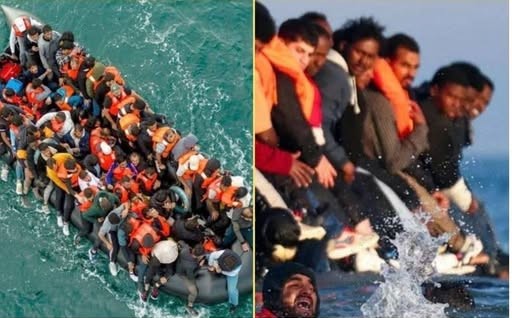
For many observers, the timing of the proposal is no coincidence. Immigration has remained among the most politically significant issues in Britain for years, influencing elections, reshaping party politics, and driving passionate public debate. Since the Brexit referendum, successive governments have promised stronger border controls, reductions in irregular migration, and reforms to the asylum system. Yet despite repeated legislative changes and new international agreements, the issue continues to dominate headlines. Record numbers of small-boat crossings across the English Channel, growing pressure on temporary accommodation, rising public expenditure, and lengthy asylum processing times have all contributed to widespread concern. Against this backdrop, proposals promising dramatic action inevitably receive enormous public attention, particularly among voters who believe previous governments have failed to deliver meaningful change.
Supporters of tougher immigration enforcement argue that Britain’s asylum system has become increasingly difficult to manage. They point to the growing backlog of asylum applications, the financial cost of housing applicants while their claims are processed, and the challenges facing local authorities responsible for providing accommodation and essential services. They argue that long processing times create uncertainty for applicants while also placing sustained pressure on taxpayers and communities. From this perspective, reducing illegal entry, accelerating removals for those without legal entitlement to remain, and strengthening deterrence are viewed as necessary steps to restore confidence in the immigration system. Many supporters believe that maintaining effective border controls is not incompatible with compassion but instead essential to preserving public trust in lawful migration.
Advocates of stronger enforcement frequently emphasize the distinction between legal immigration and irregular migration. Britain continues to issue visas for workers, students, family members, and humanitarian pathways under various legal programs. Those favoring stricter asylum policies often argue that maintaining generous legal migration routes requires governments to demonstrate firm control over unauthorized entry. They contend that allowing irregular migration to continue unchecked risks undermining public confidence in the broader immigration framework. For these supporters, a robust enforcement policy is presented not as opposition to immigration itself but as an effort to ensure that immigration occurs through established legal channels.
The reported proposal has nevertheless attracted immediate criticism from legal scholars and immigration specialists, particularly regarding suggestions that some individuals who have already been granted protection could potentially face removal under certain circumstances. In Britain, refugee status, humanitarian protection, and other forms of legal residence are governed by domestic legislation as well as international agreements, including obligations arising under the 1951 Refugee Convention and the European Convention on Human Rights. While refugee status can, under existing legal frameworks, be revoked in specific circumstances such as fraud, serious criminal conduct, or changed conditions in the country of origin, any broad proposal affecting large numbers of individuals would almost certainly face extensive legal scrutiny. Experts note that implementation would depend upon detailed legislation, judicial review, and compliance with both domestic and international law.
Human rights organizations have expressed concern that sweeping deportation proposals could create uncertainty for individuals who have already established lives within Britain. Many asylum recipients eventually find employment, enroll their children in schools, learn English, and integrate into local communities. Critics argue that reopening previously settled cases without compelling legal justification could undermine certainty within the asylum process and generate significant humanitarian consequences. They emphasize that every asylum case involves unique circumstances requiring individual assessment rather than broad political generalization. Humanitarian groups also stress that people granted refugee protection often fled conflict, persecution, or other serious threats, making careful legal safeguards particularly important.
The debate has therefore evolved beyond immigration statistics into broader questions concerning the rule of law. Supporters of stronger enforcement maintain that Parliament possesses the democratic authority to reform immigration legislation when voters demand change. They argue that governments should retain the flexibility to revise asylum rules in response to evolving circumstances while ensuring that public confidence in immigration policy is maintained. Critics respond that democratic governments must also respect constitutional principles, judicial oversight, and international legal commitments, particularly when decisions affect fundamental human rights. This tension between parliamentary sovereignty and legal obligations has become one of the defining features of Britain’s modern constitutional debate.
Another important aspect of the discussion concerns the practical feasibility of any large-scale deportation program. Immigration enforcement is considerably more complex than political slogans may suggest. Before removals can occur, authorities generally require identity verification, documentation, diplomatic cooperation from receiving countries, transportation arrangements, detention capacity where appropriate, and opportunities for individuals to appeal decisions through established legal channels. Countries of origin may refuse to accept returnees without appropriate documentation, while ongoing conflicts or security concerns can further complicate removals. Consequently, immigration specialists caution that even governments strongly committed to increasing deportations often encounter substantial logistical and legal obstacles.
Financial considerations also feature prominently in the debate. Supporters argue that reducing long-term accommodation costs and accelerating removals could eventually save taxpayers significant amounts of money. Housing asylum applicants while claims are processed has become increasingly expensive as application backlogs have grown. Those favoring stricter policies contend that stronger deterrence could reduce future arrivals while easing pressure on public finances. Critics, however, note that large-scale deportation operations themselves require considerable investment in legal proceedings, detention facilities, transportation, administrative staff, international negotiations, and ongoing enforcement. They argue that any cost-benefit analysis must account for the substantial resources required to implement such policies effectively.
Business groups have introduced another perspective by highlighting Britain’s continuing labor shortages across multiple sectors. Agriculture, healthcare, hospitality, social care, logistics, construction, and technology have all experienced recruitment challenges in recent years. Employers often argue that carefully managed immigration contributes positively to economic growth by filling positions that domestic labor markets struggle to supply. While this debate primarily concerns labor migration rather than asylum policy, economists frequently observe that immigration discussions rarely exist in isolation. Decisions affecting overall migration policy may influence workforce availability, demographic trends, tax revenues, and long-term economic planning.
Communities across Britain have experienced immigration differently, contributing to contrasting public attitudes. Some areas have seen relatively little migration and express concerns based largely on national political debates or media coverage. Others have welcomed significant numbers of newcomers over many years, experiencing both the benefits and challenges associated with demographic change. Local authorities responsible for housing, education, healthcare, and community integration often emphasize that adequate planning and financial support are essential regardless of the scale of migration. Public opinion therefore varies considerably depending upon local experience, economic conditions, and individual perspectives.
Political analysts note that immigration has repeatedly reshaped Britain’s electoral landscape. Parties across the political spectrum have adjusted their positions over time in response to changing public opinion, international events, and migration trends. Reform UK has consistently emphasized stronger border controls as one of its defining policy priorities, seeking to distinguish itself from both the governing party and the opposition. By advancing proposals that attract significant media attention, the party may also be attempting to influence the broader political agenda, encouraging larger parties to respond with alternative policies or tougher rhetoric. Immigration has historically proven capable of transforming election campaigns, making future developments particularly significant.
Opinion polling over recent years has often shown that immigration remains among the issues voters consider most important, although priorities shift depending on economic conditions, healthcare pressures, inflation, housing affordability, and international events. For some voters, stronger immigration enforcement symbolizes governmental competence and national sovereignty. Others prioritize humanitarian obligations, international cooperation, and refugee protection. Many citizens occupy positions somewhere between these viewpoints, supporting secure borders while also emphasizing fair treatment for genuine refugees. This diversity of opinion helps explain why immigration continues to generate such passionate public discussion.
International implications also deserve careful consideration. Britain’s asylum policies are closely watched by European governments confronting similar migration pressures. France, Germany, Italy, Greece, Spain, the Netherlands, Sweden, Denmark, Poland, and several other countries continue debating reforms intended to balance humanitarian responsibilities with border management. Developments in one country frequently influence political discussions elsewhere, particularly when governments adopt innovative or controversial approaches. As a result, proposals emerging from Britain often resonate well beyond its own borders.
Relations with neighboring countries also play an important role. Cooperation between Britain and France has become increasingly important in addressing Channel crossings, disrupting people-smuggling networks, and improving intelligence sharing. Diplomatic relationships with countries of origin and transit similarly affect return agreements, document verification, and migration management. Consequently, significant changes to British immigration policy may require extensive international engagement rather than unilateral domestic legislation alone.
Another recurring theme involves public confidence in state institutions. Some supporters of stricter policies argue that prolonged delays, rising costs, and continued irregular arrivals have weakened confidence in successive governments’ ability to manage borders effectively. They believe visible enforcement measures are necessary to restore credibility. Critics counter that durable solutions require investment in faster asylum processing, stronger international cooperation against smuggling networks, improved legal migration pathways, and more efficient administrative systems rather than relying primarily on high-profile deportation proposals. Both perspectives ultimately seek more effective governance but differ significantly regarding the methods most likely to achieve it.
Legal experts emphasize that proposals announced during political campaigns should not automatically be interpreted as imminent government policy. Election platforms often outline broad objectives rather than fully developed legislative frameworks. Even if a proposal gains political support, transforming it into enforceable law generally requires parliamentary debate, committee scrutiny, legal drafting, potential amendments, judicial consideration, and practical implementation planning. This process can substantially modify original proposals before any changes take effect.
Public reaction has reflected the deeply polarized nature of the immigration debate. Supporters describe tougher enforcement as overdue and argue that governments have a responsibility to maintain effective border control while ensuring immigration rules are respected. They contend that failure to address irregular migration risks encouraging criminal smuggling organizations and undermining public confidence in lawful immigration. Critics argue that broad deportation proposals risk stigmatizing vulnerable individuals, increasing social division, and creating uncertainty for people who have already rebuilt their lives in Britain after fleeing persecution or conflict. Between these opposing viewpoints lies a substantial portion of the public seeking policies that combine border security with humanitarian responsibility.
Social media has further amplified the controversy, with headlines, short video clips, and political commentary spreading rapidly across multiple platforms. While online discussion has expanded public awareness of the reported proposal, it has also contributed to confusion regarding what has actually been proposed, what remains speculative, and what existing law already permits. Immigration specialists therefore encourage careful examination of official policy documents and verified statements rather than relying solely on viral summaries or emotionally charged commentary circulating online.
Whatever ultimately happens, the controversy demonstrates that immigration remains one of the defining political issues shaping Britain’s future. Questions concerning border control, asylum procedures, national identity, labor markets, public services, international obligations, and democratic accountability continue to intersect in ways that affect millions of people. The discussion is no longer limited to technical legal reforms but increasingly reflects competing visions of Britain’s place in a rapidly changing world.
As political parties continue presenting their respective approaches ahead of future elections and parliamentary debates, the immigration conversation is likely to remain central to British public life. Whether voters ultimately favor stricter enforcement, expanded humanitarian protections, or a combination of both, the decisions made in the coming years could influence the country’s legal framework, international relationships, and social landscape for decades to come. The current controversy surrounding the reported Reform UK proposal therefore represents more than a single policy debate—it has become another chapter in Britain’s continuing struggle to define how it balances national sovereignty, border security, economic needs, humanitarian obligations, and the rule of law in the twenty-first century.