
The first thing Isidora Santoro noticed was that her sister had altered the waist of her wedding gown.
The second was that nobody in the cathedral looked surprised to see Viviana wearing it.
The third was that when Cassian Drago finally reached the altar, he took one look at the beautiful bride waiting for him and said, “Stop.”
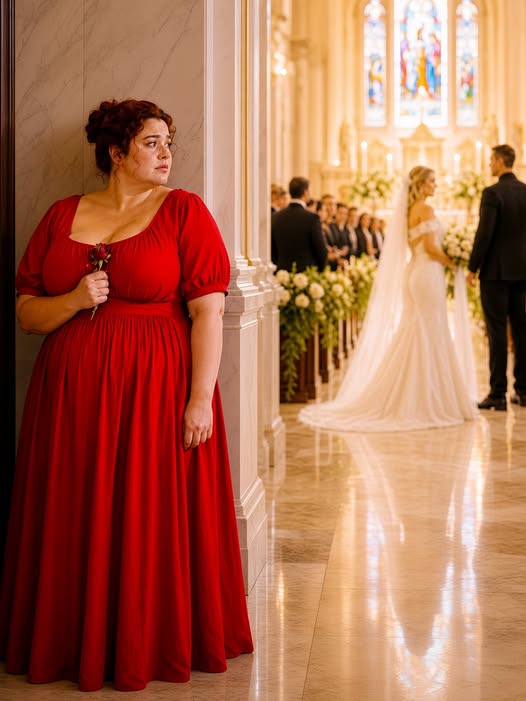
Isidora stood in the shadowed vestibule of San Lorenzo Cathedral with a dying rose crushed between her fingers.
One thorn had already broken the skin beneath her thumb.
She barely felt it.
Two hundred guests filled the pews beneath carved stone arches and old stained glass. Candles flickered along the aisle. Organ music rolled beneath the vaulted ceiling with enough grandeur to make betrayal look sacred.
At the altar, twenty-one-year-old Viviana Santoro looked breathtaking.
That was not bitterness.
It was simply true.
The ivory silk had been cut for Isidora’s fuller body only three weeks earlier, then hurriedly taken in through the waist and shoulders to fit her younger sister. Delicate lace covered Viviana’s arms. Her dark hair had been pinned beneath their grandmother’s cathedral-length veil.
Even from the back of the church, Isidora could see the slight pull in the bodice where the seamstress had altered it.
She could also remember exactly where Señora Capelli’s needle had pierced her own thumb during the final fitting.
A tiny stain remained somewhere inside the lining.
Her blood.
Her dress.
Her sister.
The ceremony that had been planned around Isidora’s name.
Nobody had even asked her permission before taking the gown from her closet.
That detail hurt more than the marriage itself.
She had never loved Cassian Drago.
She had never even met him.
The alliance between the Santoro and Drago families had been negotiated through attorneys, business advisers, and two sets of people whose polite titles did very little to disguise the fact that both families had roots in organized crime.
The legal businesses were real.
Freight.
Importing.
Construction.
Warehousing.
Commercial property.
So were the darker histories around them.
Isidora had spent most of her adult life making sure the legitimate side of her father’s company remained solvent enough that banks asked fewer questions about the Santoro name.
She had not asked for the marriage.
But she had negotiated its business terms.
Six pages of handwritten revisions.
Transport routes.
Debt exposure.
Distribution rights.
Limits on personal guarantees.
Rules preventing the Drago organization from using Santoro family assets without written consent.
Her father had mocked the pages when she finished them.
Cassian Drago’s attorney had accepted almost every line.
Eleven days before the wedding, Isidora’s mother had entered her bedroom without knocking.
Luciana Santoro had closed the door behind her.
She wore pearls at breakfast.
Isidora had always considered that suspicious.
“Darling,” her mother began, “we need you to be reasonable.”
Isidora looked up from the monthly warehouse accounts.
Reasonable was the word her family used when they had already made the decision and wanted her cooperation afterward.
“What happened?”
Luciana sat on the edge of the bed.
“Your father spoke with Drago’s people.”
“About?”
“The wedding.”
Isidora waited.
Her mother’s eyes moved toward the ivory gown hanging near the window.
Then back.
“Viviana will take your place.”
The words were so absurd that Isidora initially believed she had misunderstood them.
“In the ceremony?”
“In the marriage.”
Isidora set down her pen.
“No.”
Luciana’s expression tightened with almost maternal patience.
“Isidora.”
“My name is on the agreement.”
“Names can be amended.”
“The business addendum specifically identifies me.”
“Cassian Drago wants a Santoro bride.”
“You don’t know what Cassian Drago wants.”
“Your father has been handling these matters for thirty years.”
“And I have been handling his accounts for seven.”
That landed.
Luciana disliked reminders that the family’s financial survival depended increasingly on the daughter she described as lacking social gifts.
“You are very intelligent,” her mother said.
Isidora almost laughed.
There it was.
The compliment before the knife.
“But Cassian’s world requires a certain kind of wife.”
“What kind?”
“One who can host.”
“I can host.”
“One who can represent the family.”
“I represent the family every time a lender receives accurate projections instead of one of Father’s fantasies.”
Luciana’s mouth tightened.
“You know what I mean.”
“Yes.”
Isidora did.
Pretty.
Thin.
Easy to display.
Viviana was all three.
At twenty-six, Isidora had spent years hearing descriptions of herself presented as practical facts.
Too serious.
Too heavy.
Too plain.
Too argumentative.
Too interested in ledgers.
Too comfortable correcting men who were older than she was.
Viviana was radiant.
Isidora was useful.
The family had always understood that distinction.
When they were children, Viviana received the larger bedroom because she “needed better light.”
At nineteen, part of Isidora’s college savings disappeared into what her mother called an emergency household expense and what eventually appeared as three seasons of Viviana’s clothes.
When Antonio Santoro’s bookkeeping became too complicated for him to manage, Isidora took over.
No salary.
No title that meant anything.
She was family.
Family, she had learned, was another word people sometimes used when they wanted professional labor without professional respect.
“So what exactly happens to me?” Isidora asked.
Luciana looked relieved that they had reached logistics.
“You remain here.”
“Doing what?”
“What you’ve always done.”
“The accounts.”
“Among other things.”
“And Viviana becomes Mrs. Drago.”
“Yes.”
“While I continue keeping the Santoro companies alive.”
Luciana’s face changed.
“You make everything sound ugly.”
“I make numbers sound like numbers.”
“This is for the family.”
“No.”
Isidora stood.
“This is for Viviana.”
Her mother’s composure cracked.
“Don’t be jealous.”
Isidora stared at her.
That hurt more than the substitution.
Not because the accusation was true.
Because it was convenient.
If Isidora objected, she was jealous.
If she accepted, she was mature.
The family had built every choice so that obedience became proof of character.
“I don’t want Cassian Drago,” she said.
Luciana looked confused.
“Then what is the problem?”
Isidora looked toward the wedding gown.
“The problem is that you decided I was replaceable without asking whether I wanted to be replaced.”
Her mother said nothing.
Isidora continued.
“You took a contract I wrote. A future negotiated in my name. A dress fitted to my body. And you gave all three to Viviana because you assumed I would continue doing the work afterward.”
Luciana stood.
“You always have to make things dramatic.”
Isidora almost smiled.
“No. That is Viviana’s department.”
Her mother left angry.
Viviana came later.
She cried.
Of course she cried.
“I couldn’t say no,” she whispered.
Isidora looked at her younger sister.
“You could have.”
“Mama said the family needs this.”
“You are twenty-one.”
“What was I supposed to do?”
“Say no.”
Viviana’s eyes filled.
“You don’t understand.”
“I understand perfectly.”
“You never wanted him.”
“That still doesn’t make him yours.”
Viviana flinched.
For one moment, guilt looked genuine.
Then she glanced toward the dress.
“Mama says Cassian barely knows anything about either of us.”
That sentence stayed with Isidora.
“You believe that?”
Viviana hesitated.
“He has never met you.”
“No.”
“So what difference could it make?”
Isidora thought of the six pages she had written.
The questions sent back through Cassian’s attorneys.
The margin notes requesting her calculations on rail freight versus coastal shipping.
The fact that he had rejected two of Antonio’s proposed clauses but accepted hers after she explained why.
She said nothing.
Eleven days later, she came to the wedding anyway.
Not because she planned to stop it.
Not because she intended to beg.
She came because she needed to see the final theft with her own eyes.
For years, Isidora had survived her family by translating insult into responsibility.
They overlooked her.
She worked harder.
They spent money recklessly.
She fixed the accounts.
They praised Viviana.
Isidora pretended praise did not matter.
She had finally become tired of converting pain into usefulness.
So she bought one rose from a street vendor outside the cathedral.
She wore a faded plum dress she already owned.
Flat leather shoes.
No jewelry.
No makeup.
And stood where nobody would notice her.
She wanted to feel angry.
Fully.
Without correcting it.
Without making it productive.
At the altar, Antonio Santoro sat in the front pew looking triumphant.
His suit was expensive from a distance and exhausted up close.
The Santoro businesses looked much the same.
Luciana dabbed her eyes with a silk handkerchief.
Viviana smiled at the guests.
Isidora watched.
Then the atmosphere changed.
It happened before she saw why.
Conversations stopped.
Not gradually.
Instantly.
The side doors opened.
Cassian Drago entered.
Isidora had seen photographs.
Photographs had failed.
He was thirty-eight, tall enough to make the doorway look smaller, wearing a black three-piece suit without a tie.
His dark hair was cut short at the sides.
A pale scar crossed his left eyebrow.
The photographs always made his face look angry.
In person, Isidora saw something different.
Control.
He did not look like a man struggling with temper.
He looked like a man who rarely needed to display it.
Two men followed several paces behind.
Neither carried visible weapons.
They did not need to.
Everyone in the cathedral knew exactly who Cassian was.
The Drago family controlled a major Northeast freight network stretching from New York through New England.
Most of the current operation was legitimate.
Port logistics.
Cold storage.
Warehousing.
Construction materials.
But the family name had been built by men for whom legal distinctions had once been flexible suggestions.
Cassian had spent the previous decade pulling much of the organization toward businesses that could survive sunlight.
That had made him richer.
It had also made him enemies on both sides.
Men who thought he was becoming weak.
And men who thought legitimate money did not erase old blood.
The Santoro alliance was supposed to stabilize several contested shipping routes and combine distribution networks.
It was not a love story.
Everyone understood that.
Cassian reached the bottom of the altar steps.
Viviana gave him her best smile.
The smile that had obtained dresses, invitations, forgiven mistakes, and every room with better light.
Cassian did not return it.
He looked at her.
Then the gown.
Then Antonio.
The priest opened his book.
“Dearly beloved—”
“Stop.”
Cassian did not raise his voice.
He did not need to.
The word carried through the cathedral.
The priest froze.
Viviana’s smile disappeared.
Cassian looked at her again.
“You are not Isidora Santoro.”
Silence.
Viviana’s face emptied.
Antonio rose too quickly.
“Cassian.”
Cassian turned toward him.
Antonio forced a laugh.
“A small adjustment.”
“No.”
“My attorneys informed—”
“Your attorney sent a request forty-eight hours ago.”
Antonio’s expression shifted.
Isidora’s attention sharpened.
Cassian continued.
“My counsel rejected it.”
Luciana looked at her husband.
That was clearly new information to her.
Antonio tried again.
“Viviana is my younger daughter. A more appropriate match socially. The alliance remains exactly the same.”
“No.”
Cassian’s voice remained level.
“The alliance is not the same.”
Antonio’s face reddened.
“You required a Santoro marriage.”
“I negotiated with Isidora Santoro.”
“You negotiated with me.”
Cassian’s eyes changed.
“No.”
That one word was almost polite.
“I tolerated you.”
A ripple moved through the cathedral.
Cassian continued.
“I agreed to your proposal because someone in your office rewrote half your logistics plan and prevented your company from guaranteeing obligations it could not afford.”
Antonio went very still.
Isidora did too.
Cassian looked toward the front pew.
“The person who identified fourteen weak distribution points.”
Then toward the altar.
“The person who refused my counsel’s first indemnity clause.”
His gaze moved over the congregation.
“The person whose six-page handwritten analysis was the only part of the Santoro proposal that did not insult my intelligence.”
Nobody moved.
Cassian looked back at Antonio.
“That person was Isidora.”
Viviana’s eyes widened.
Antonio’s mouth opened.
“No one told me my bride had changed because there was never authorization to change her.”
Luciana stood.
“Cassian, Viviana is younger.”
He turned to her.
Isidora had never seen her mother lose confidence so quickly.
“Congratulations.”
A few people inhaled.
Cassian’s face remained impassive.
“I am purchasing neither youth nor decoration.”
Viviana started crying.
Real tears now.
Not guilt.
Humiliation.
Isidora felt no satisfaction.
Only a strange hollow pressure in her chest.
Cassian looked toward the back of the cathedral.
Not searching randomly.
Directly.
His eyes found the vestibule.
Found her.
Isidora’s fingers tightened around the rose.
He started down the aisle.
Every head turned with him.
Isidora considered leaving.
For perhaps two seconds.
Then stopped herself.
She had spent twenty-six years disappearing before other people could decide she did not belong.
Not again.
She stepped away from the wall.
The shadows released her.
Cassian stopped several feet away.
Up close, his expression was less severe than his photographs suggested.
Tired around the eyes.
Alert.
He looked at the rose.
The blood on her thumb.
The ink faintly stained along two fingers.
Then her face.
“You are Isidora.”
It was not a question.
“Yes.”
“You wrote the restructuring addendum.”
“Yes.”
“The transport projections.”
“Yes.”
“The handwritten response concerning personal guarantees.”
“I wrote that too.”
Something almost amused moved through his eyes.
“My attorney called it aggressive.”
“Your attorney tried to secure your interests.”
“And you?”
“I secured mine.”
There.
The faintest change in his mouth.
Cassian glanced over his shoulder at the cathedral full of people trying not to breathe.
Then back at her.
“I would like to speak with you privately.”
Isidora’s heartbeat accelerated.
“Why?”
“Because everyone behind me has already made enough decisions for you today.”
That sentence reached somewhere deeper than she expected.
He extended no hand.
Issued no command.
Simply waited.
“Where?”
“The side chapel.”
“You bring one attorney.”
“Agreed.”
“I bring mine.”
Cassian looked toward the front.
“Do you have one?”
“No.”
“Then choose anyone in this building you trust.”
Isidora almost laughed.
“That may take time.”
“Take it.”
She looked toward Father Matteo, the elderly church administrator who had known the Santoro family since Isidora was a child.
He was not a lawyer.
But standing three pews behind him was Elena Rossi, counsel for one of the Santoro suppliers and one of the only women Isidora had ever watched tell Antonio no without softening the word afterward.
“Elena Rossi.”
Cassian nodded.
His attorney went to retrieve her.
Ten minutes later, Isidora sat in the side chapel with Cassian, Elena, Cassian’s attorney Marco Bellini, and Father Matteo.
Her parents were not invited.
Neither was Viviana.
Cassian placed a folder on the small wooden table.
Isidora recognized the first page.
The alliance agreement.
Her name remained typed beneath the marriage provision.
ISIDORA SANTORO.
Not daughter.
Not one eligible female member of the Santoro family.
Her.
Attached behind it was a photocopy of her handwritten six-page analysis.
Evidence one.
Cassian rested one hand beside the file.
“I agreed to marry the person who wrote this.”
Isidora looked at him.
“That is an unusual basis for marriage.”
“Yes.”
“You’ve never met me.”
“No.”
“You don’t know whether I’m unbearable.”
“I assumed someone who wrote page four was probably unbearable.”
Elena coughed to hide a laugh.
Isidora’s mouth moved despite herself.
Cassian continued.
“I am not asking you to marry me because your family embarrassed me.”
“Good.”
“I am not asking because your sister is unsuitable.”
“Also good.”
“I am asking whether you still want the arrangement you negotiated.”
Isidora looked at the agreement.
Eleven days earlier, she had believed she had no say in losing it.
Now Cassian was offering it back.
That did not automatically make it hers.
“What happens if I say no?”
Cassian answered immediately.
“I do not marry Viviana.”
Antonio would be furious.
“The alliance?”
“Ends.”
“My family?”
“That becomes their problem.”
Isidora stared.
“And me?”
Cassian’s expression remained steady.
“You walk out of this cathedral.”
“To what?”
“Whatever you choose next.”
“That sounds generous for a man whose entire organization benefits from this marriage.”
“It is not generosity.”
He glanced at the agreement.
“It is consent.”
The word was so simple that Isidora almost distrusted it.
She looked toward Elena.
The attorney nodded slightly.
No performance.
No warning.
Just confirmation that she had heard the same thing.
Isidora looked back at Cassian.
“If I marry you, I have conditions.”
Marco Bellini reached for his pen.
Cassian said, “Of course you do.”
“Separate bedrooms unless we both choose otherwise.”
“Yes.”
“No expectation that I appear at events purely as decoration.”
“Yes.”
“If I am expected to work on Drago finances, I have full access to the records relevant to that work.”
Cassian paused.
“Legal operations.”
Isidora caught it.
“What does that mean?”
“It means there are parts of my family history I am actively dismantling.”
“That is not an answer.”
His eyes sharpened.
She continued.
“I will not put my name on hidden accounts.”
“You will not.”
“I will not launder money.”
“No.”
“I will not be asked to sign documents I cannot examine.”
“No.”
“And if anything is being done in my name without my knowledge, I leave.”
Cassian looked at Marco.
“Write that.”
The attorney began.
Isidora continued.
“I retain independent counsel.”
“Yes.”
“My personal property remains mine.”
“Yes.”
“If the marriage ends, I do not leave dependent on your generosity.”
Cassian nodded.
“Define what you need.”
Isidora looked at Elena.
“An independent settlement held outside Drago operating entities.”
Elena named a figure.
Marco raised an eyebrow.
Cassian said, “Done.”
Isidora studied him.
“You agree very quickly.”
“You negotiate clearly.”
“That has irritated most men I know.”
“I am not most men you know.”
“Every man says that before proving otherwise.”
This time Cassian did smile.
Briefly.
“Then judge the proof.”
The conditions were handwritten into an addendum.
Both attorneys initialed them.
Father Matteo witnessed.
Isidora read every line.
Then read them again.
Cassian did not hurry her.
Outside, two hundred guests waited.
Her mother was probably having a nervous breakdown.
Her father was probably planning three different ways to blame Isidora for the consequences of his own decisions.
Viviana was wearing the dress that had once been Isidora’s.
None of that mattered inside the chapel.
For the first time, the question belonged to her.
Elena leaned toward her.
“You do not owe anybody a yes.”
“I know.”
“Not him.”
“I know.”
“Not your family.”
“I know.”
“Not because you were humiliated.”
Isidora looked at her.
“That one I needed.”
Elena touched her hand.
Isidora stood.
Walked to the chapel window.
Outside, late-afternoon light caught the stone courtyard.
She thought about returning home with Antonio and Luciana.
The accounts.
The small comments.
Viviana’s triumph eventually turning into resentment because she had married a man selected for someone else.
She thought about walking away from all of them instead.
She had enough knowledge to find work.
Not immediately at the level she deserved.
But enough.
Then she thought about Cassian.
A stranger.
A dangerous name.
A man who had entered a cathedral prepared to fulfill an alliance and stopped because the person in front of him was not the woman whose work he had read.
That was not love.
Isidora was not foolish enough to call it that.
But it was recognition.
And she had been starved of recognition long enough to know its value without confusing it with safety.
She turned.
“If I marry you today, it is because I choose the agreement I negotiated.”
Cassian nodded.
“Understood.”
“Not because you rescued me from my sister.”
“I did not rescue you.”
Good answer.
“Not because my family deserves humiliation.”
“No.”
“And if you ever tell anyone you ‘claimed’ me, I will personally revise every profit projection you own until your accountants weep.”
Marco looked down.
Elena smiled openly.
Cassian’s eyes held hers.
“Also understood.”
Isidora picked up the signed addendum.
“Then let us not keep Father Matteo waiting.”
When they returned to the main cathedral, everyone stood.
Isidora did not know whether it was respect, confusion, or fear.
She no longer cared.
Cassian walked beside her.
Not ahead.
Not pulling.
At the vestibule, he finally extended his hand.
Palm upward.
An offer.
Isidora looked down.
Then at the wilted rose still in her other hand.
She opened her fingers.
The flower fell to the marble.
Softly.
Something finished.
She placed her hand in Cassian’s.
His grip closed around hers.
Warm.
Controlled.
Not crushing.
They started forward.
Isidora counted the steps.
Forty-seven.
She had always loved numbers because numbers stayed still long enough to be understood.
At step twelve, her mother began crying.
At step nineteen, her father stepped into the aisle.
At step twenty-seven, Antonio finally found his voice.
“This is insanity.”
Cassian stopped.
Isidora did too.
Antonio looked at his daughter.
“Isidora, come here.”
She almost laughed.
Twenty-six years of conditioning could apparently be compressed into two words.
Come here.
As though she were still twelve.
As though Antonio’s authority had survived the morning.
Isidora turned toward him.
“No.”
Her father stared.
Luciana whispered her name.
Isidora continued.
“You changed the marriage without my consent.”
“We did what was necessary.”
“For whom?”
“For this family.”
“No.”
Her voice carried farther than she intended.
“You did what was easiest because you believed I would continue fixing everything afterward.”
Antonio’s face darkened.
“This is not the place.”
“You chose the place when you put Viviana in my dress.”
A murmur moved through the pews.
Viviana stood near the altar, tear-streaked and humiliated.
For one second Isidora looked at her and saw not a rival.
A younger woman raised inside the same family machine.
Rewarded for being beautiful.
Punished whenever beauty failed to solve something.
Viviana had benefited from the system.
She had also never learned how to live outside it.
Isidora’s anger remained.
But it became clearer.
“My issue is not with your face, Viviana,” she said.
Her sister looked up.
“It is with your decision.”
Viviana’s mouth trembled.
“I’m sorry.”
Isidora believed she might mean it now.
“That does not undo it.”
“No.”
“But it matters that you finally said it.”
Antonio stepped forward.
“Enough.”
Isidora looked at him.
“No.”
That word felt extraordinary.
“No more.”
She turned back to Cassian.
“We were walking.”
They continued.
At the altar, Cassian did not put Viviana aside with some humiliating gesture.
He asked that she be given a private room.
He asked the priest to pause while attendants helped her remove the gown.
Isidora did not want it back.
That surprised everyone.
Especially Luciana.
“It is yours,” her mother whispered.
“No.”
“You designed it.”
“I designed it for another version of this day.”
She looked down at her plum dress.
“It can stay with her.”
Viviana stared.
Isidora added, “But you pay Señora Capelli.”
A startled laugh escaped someone in the front pew.
Even Cassian looked amused.
Viviana nodded through tears.
“I will.”
The ceremony resumed with Isidora in plum.
The legal marriage license already bore her name.
The alliance addendum now bore hers too.
Cassian’s family signet ring was too large for her finger.
He looked at it.
Then at her.
“This was poorly planned.”
“Your first accurate statement as a husband.”
“We are not married yet.”
“Then you still have time.”
Father Matteo made a strangled sound that might have been a laugh.
Marco found a narrow strip of soft leather cord used to secure the ring temporarily.
Cassian slid it onto her finger.
Loose.
Heavy.
Unmistakably his family’s symbol.
When Father Matteo reached the final blessing and said, “You may kiss the bride,” Cassian did not move.
He looked at Isidora.
The entire cathedral waited.
He said quietly, “May I?”
No one else heard.
Isidora did.
She thought about how little they knew each other.
“Not yet.”
Cassian nodded.
No humiliation.
No disappointment.
“Then not yet.”
For reasons Isidora could not explain, that was the moment she nearly cried.
Not when he stopped the wrong wedding.
Not when he identified her work.
Not when he signed the conditions.
When he accepted no.
Afterward, there was no traditional reception.
Antonio had lost the appetite for celebration.
Luciana claimed illness.
Viviana disappeared with two cousins.
Cassian’s people loaded only Isidora’s small bag into one of the waiting vehicles.
Her entire life fit inside it because her mother had refused to let her return home for clothes.
“You leave with him,” Luciana had said, “you leave with what you’re wearing.”
Isidora had looked around her childhood bedroom.
The ledgers.
Books.
Three practical dresses.
The desk her father bought secondhand when she was sixteen.
Then she took exactly what was hers.
Her personal papers.
Her mother’s old fountain pen, which had been a gift years earlier and therefore legally hers despite Luciana’s sudden objection.
Two notebooks.
Her bank records.
One sweater.
She left everything else.
Cassian waited outside.
When she came down, he looked at the single bag.
“That’s all?”
“Yes.”
“Do you want anything else?”
She looked back at the Santoro townhouse.
“No.”
He did not say he would replace everything.
Good.
She did not want to become another woman whose belongings existed at a man’s pleasure.
The Drago estate sat on the Maine coast several hours north of New York.
Old stone.
Wind.
Dark water.
No ornamental gates.
No white columns.
No sprawling Italianate gardens designed for photographs.
It looked like a fortress because pieces of it had once been one.
The Drago family had owned the property for generations.
Cassian had modernized the inside without disturbing the rough exterior.
Isidora looked through the vehicle window as they approached.
“It lacks columns.”
Cassian turned.
“Is that criticism?”
“Observation.”
“Columns are impractical when winter ice attacks from three directions.”
“Better explanation than the one I expected.”
“What did you expect?”
“Something involving enemies.”
His mouth moved.
“Those too.”
The front doors opened.
Mrs. Elena Ferretti waited inside.
Sixty.
Silver hair.
Dark dress.
An expression that suggested she had been disappointed by humanity early and decided to compensate through excellent organization.
Cassian introduced Isidora.
Then said, “She has full access to financial records for the legal businesses.”
Mrs. Ferretti nodded.
“Of course.”
“Anything she asks about operations, answer.”
“Within her agreed scope,” Isidora added.
Cassian looked at her.
“Within her agreed scope.”
Mrs. Ferretti looked between them.
Something in her face changed.
Approval.
Tiny.
But real.
“Welcome, Mrs. Drago.”
“Isidora.”
A pause.
Then Mrs. Ferretti nodded.
“Welcome, Isidora.”
Her rooms occupied the east wing.
Cassian’s were west.
Between them sat a shared office.
Two desks.
Two windows.
Shelves of financial records.
Fresh legal pads.
Ink.
Isidora stopped beside the desk.
Cassian had noticed.
At the cathedral.
Her fingers.
He remembered.
“Something wrong?”
“No.”
She touched the ink bottle.
“Something right.”
That first night, she slept twelve hours.
The next morning, she woke before six.
Habit.
She dressed in the same plum dress because she owned nothing else suitable.
Went downstairs.
Found Mrs. Ferretti already awake.
Coffee appeared without discussion.
“Mr. Drago said you would want the freight ledgers.”
“He did?”
“He said you wake early when you have numbers.”
Isidora took the coffee.
“Does he always observe people this closely?”
Mrs. Ferretti gave her a long look.
“No.”
Then walked away.
Isidora opened the first ledger.
By lunchtime, she had found three inconsistencies.
Not criminal.
Wasteful.
Different divisions paying different rates for the same refrigerated transport.
Duplicate insurance riders.
A warehouse lease renewing at an absurd premium because no one had challenged the landlord in four years.
She made notes.
At dinner, Cassian asked how her morning went.
“Expensive.”
His fork stopped.
“How expensive?”
“Your legal distribution network is bleeding approximately nine percent annually through preventable inefficiency.”
He stared.
“Approximately?”
“I have only reviewed five divisions.”
“How much after all fourteen?”
“I’ll know when I know.”
Cassian sat back.
“You enjoy this.”
“Finding waste?”
“Finding the story inside the numbers.”
Isidora looked at him.
“Yes.”
He nodded.
“Good.”
No joke.
No suggestion she should relax.
No comment about honeymooning.
Good.
She spent the first week learning.
The Drago company had legitimate revenue large enough to survive without its older criminal income.
That fact interested Isidora.
“You could leave the rest,” she said one evening.
Cassian looked up.
They were in the shared office.
“Eventually.”
“That is not a timeline.”
“No.”
“Why not?”
“Because leaving organized crime is not the same as resigning from a bank.”
“I know.”
“People depend on old agreements.”
“People always say that about systems that benefit them.”
His eyes narrowed.
“That was not fair.”
“Wasn’t it?”
“No.”
He stood.
For the first time since the wedding, Isidora sensed real anger.
Not directed at her exactly.
At the accusation.
“My father built parts of this organization before I was born.”
“That does not make them sacred.”
“I didn’t say it did.”
“Then what makes them necessary?”
“Sometimes if you remove one structure too quickly, somebody worse fills the space.”
Isidora considered.
That was not the answer she expected.
“Then change it carefully.”
“I am.”
“Show me.”
Cassian looked at her.
“What?”
“Not the illegal books.”
She raised one hand before he misunderstood.
“I do not want access to criminal transactions.”
“Good.”
“I want to see the legitimate revenue trend over the past five years and the percentage your family can replace without relying on old income.”
His anger faded into something else.
Interest.
“Why?”
“Because ‘eventually’ becomes measurable when money is attached.”
He stared.
Then opened a drawer.
Pulled out five annual summaries.
Placed them on her desk.
Isidora smiled.
“That is a better answer.”
Within three weeks, she had reorganized supplier negotiations for three divisions.
She did not fire people personally.
She did not have that authority.
Instead she identified one accountant whose numbers repeatedly failed basic reconciliation.
Cassian ordered an internal audit.
The audit found skimming.
He brought Isidora the result.
“You were right.”
“No.”
She read the report.
“The audit was right.”
“You flagged it.”
“I flagged an inconsistency.”
“You refuse compliments aggressively.”
“I prefer accurate ones.”
Cassian studied her.
“Fine.”
He tapped the report.
“Your suspicion was justified.”
“Better.”
The accountant was terminated and referred to counsel.
No warehouse.
No disappearance.
No dramatic retaliation.
Isidora noticed.
“Is that because of me?”
Cassian looked at her.
“No.”
Good.
He continued.
“It is because the legal businesses cannot become legitimate while I treat theft as a private feud.”
Better.
Weeks became months.
Their rhythm developed without announcement.
Cassian handled operations.
Isidora handled financial strategy within the businesses she had agreed to touch.
They argued.
Frequently.
The first real fight involved security.
Isidora discovered two men had followed her into Portland when she went to meet an independent accountant.
She confronted Cassian that evening.
“You put guards on me without telling me.”
“Security.”
“Without telling me.”
“You went alone.”
“Yes.”
“You are my wife.”
“That is not a security protocol.”
His jaw tightened.
“There are people who would use you to reach me.”
“Then explain the risk.”
“I just did.”
“No. You explained it after surveillance.”
Cassian stood behind his desk.
“I am responsible for your safety.”
“No.”
His face changed.
Isidora continued.
“You are responsible for threats your world creates.”
A pause.
“I am responsible for deciding how I respond to them.”
“You cannot make an informed decision if you don’t understand—”
“Exactly.”
Silence.
He heard himself.
Isidora folded her arms.
“You cannot claim I need information while withholding it.”
Cassian looked toward the window.
The Atlantic was black beyond the glass.
Finally he said, “There was a credible threat made against family members last week.”
“What kind?”
“A message naming the estate and my travel schedule.”
“Did it name me?”
“No.”
“Did it mention spouses?”
“Yes.”
“And you decided guards should follow me.”
“Yes.”
“Would I have agreed if you asked?”
He looked at her.
“Probably.”
“Then why didn’t you?”
The answer took longer.
“Habit.”
That was honest.
Isidora nodded.
“Change it.”
The next morning, Cassian handed her a written security briefing.
Risks.
Names redacted where necessary.
Recommended precautions.
Options.
Isidora chose one driver outside the city and two guards only at large public events.
No one followed her into meetings.
No hidden trackers.
Cassian hated half the conditions.
He honored all of them.
That mattered more.
Their marriage remained physically separate.
Not cold.
Not distant.
Simply unfinished.
They ate together most nights.
Worked beside each other.
Sometimes until one in the morning.
Cassian learned Isidora liked pears but hated apples.
She learned he drank coffee so strong Mrs. Ferretti referred to it privately as “industrial solvent.”
He learned she counted stair steps when anxious.
She learned he rubbed the scar above his eyebrow when thinking.
Neither mentioned the first time their hands touched over a transport manifest.
They both noticed.
A month later, Cassian left a single word in the margin of a forty-two-page report.
Brilliant.
Isidora stared at it longer than she wanted.
Then tore off a copy of the page.
She kept it inside her personal notebook.
Embarrassing.
True.
One night in January, Isidora looked up from her desk and found Cassian asleep over a contract.
For once, his face held no control.
Only exhaustion.
She stood.
Took his wool coat from the chair.
Laid it over his shoulders.
His eyes opened immediately.
“Sorry.”
“For what?”
“Waking you.”
“I wasn’t sleeping.”
“You were snoring.”
His expression became offended.
“I do not snore.”
“Your credibility has collapsed.”
He almost smiled.
“The Portland numbers—”
“Can wait.”
He looked at her.
“Go to bed, Cassian.”
It was the first time she used his name without title.
Something shifted.
He noticed.
So did she.
“Good night, Isidora.”
She returned to her desk.
Did not look at him again for several minutes.
Because wanting had entered the room.
Quietly.
Not dramatically.
She was not sure what to do with it.
Two weeks later, Cassian asked the question she had avoided asking herself.
“Why did you come to the cathedral?”
They were working late.
Rain struck the windows.
Isidora set down her pen.
“I told you.”
“No.”
“You did not ask before.”
“I am now.”
She leaned back.
“I wanted to watch.”
“My wedding?”
“Their theft.”
He said nothing.
“I wanted to see them take the final thing.”
“Why?”
“Because I was tired of pretending I wasn’t angry.”
Cassian’s face softened.
“I thought if I stood there and watched, maybe I would finally stop translating every insult into another task.”
“What did you feel?”
“Invisible.”
He waited.
“Until you arrived.”
“What then?”
Isidora considered.
“Curious.”
His mouth moved.
“Only curious?”
“At first.”
Cassian looked toward the old alliance papers stacked in a locked drawer.
“I read your transport memo eleven times.”
She blinked.
“Eleven?”
“Yes.”
“That is excessive.”
“It was good.”
“You could have understood it in three.”
“I understood it in one.”
“Then why eleven?”
He looked at her.
“Because I had never met anyone who argued with my counsel through footnotes.”
“That sounds like a personal failing on your part.”
“I corrected it.”
Silence settled.
Cassian continued.
“I knew your handwriting before I knew your face.”
Isidora’s breath changed.
He did not move closer.
“I knew how you built an argument.”
His voice was lower now.
“How you refused to make an assumption without attaching a source.”
She watched him.
“When your father suggested the marriage, I expected a political arrangement.”
“That is what it was.”
“Yes.”
“At first.”
There.
The words between them changed weight.
Cassian continued.
“Then those pages arrived.”
“You fell in love with an appendix?”
“No.”
Good.
“I became interested in the person who wrote it.”
He leaned back.
“Respect came first.”
Isidora said nothing.
“Then the cathedral.”
“What about it?”
“You stood in the shadows after your family had humiliated you, and when I walked toward you, you did not lower your eyes.”
Her throat tightened.
Cassian looked at her ink-stained fingers.
“I have spent my life in rooms where people become whatever they think power wants.”
His eyes returned to hers.
“You did not.”
Isidora tried humor because the alternative felt dangerous.
“I was too angry.”
“Exactly.”
She laughed softly.
Cassian did not.
“I do not want you because you saved my business.”
His voice remained careful.
“I want you because you are the only person in this house who has never treated my authority as proof I am correct.”
Isidora looked down.
The words reached the locked part of her.
The place built from twenty-six years of being useful but rarely chosen.
“Cassian.”
“Yes.”
“You are making this difficult.”
“I know.”
“That is not an apology.”
“No.”
He extended his hand across the desk.
Did not take hers.
Waited.
Isidora looked at it.
Then placed her fingers in his.
His hand closed gently.
“You were never invisible to me,” he said.
Her eyes burned.
She hated that.
“I met you in a vestibule.”
“I knew your mind before that.”
“You did not know me.”
“No.”
He nodded.
“I know more now.”
The silence held.
Then Isidora withdrew her hand.
Not rejection.
Space.
Cassian let her.
Good.
The Santoro letter arrived in February.
No family seal.
Just an envelope from a New York restructuring firm.
Isidora recognized the lawyer’s name.
She opened it.
Read the first page.
Then the second.
By the third, she understood.
Her father had been hiding liabilities.
Not just from Cassian.
From her.
Evidence two.
A consolidated debt schedule showed Antonio had mortgaged the family townhouse twice through different affiliated entities, delayed supplier payments, borrowed against warehouse receivables, and used new credit to cover older obligations.
The Santoro businesses were not temporarily strained.
They had been insolvent in practice long before the wedding.
Isidora sat motionless.
Cassian walked into the office.
Saw her face.
“What happened?”
She pushed the schedule across the desk.
He read.
His expression hardened.
“This predates the alliance.”
“Yes.”
“He never disclosed it.”
“No.”
“You didn’t know.”
“No.”
That hurt.
More than it should have.
She had managed the family accounts for years.
How had she missed it?
Cassian saw the question.
“Don’t.”
She looked at him.
“What?”
“Turn his fraud into your failure.”
Isidora’s jaw tightened.
“I kept those books.”
“You kept the books he gave you.”
“I should have—”
“No.”
Cassian’s voice sharpened.
“You cannot audit liabilities deliberately hidden outside your authority.”
She stared.
He continued.
“You did not fail because someone lied beyond the records you were allowed to see.”
Silence.
Isidora looked back at the debt schedule.
The central secret became obvious.
Her parents had not substituted Viviana only because they considered her prettier.
They had needed Cassian’s wealth.
Antonio had assumed the marriage would bring Drago capital into the Santoro businesses.
He wanted Viviana to receive the social status.
He wanted Isidora to remain at home repairing the company.
One daughter as ornament.
One as labor.
Cassian as rescue.
It was not merely favoritism.
It was a plan.
A stupid one.
But a plan.
Isidora laughed once.
Nothing funny in it.
Cassian waited.
“My father thought he could keep me and get you.”
“Yes.”
“He thought Viviana could secure the marriage while I continued handling the debt.”
“Yes.”
“And he never told me the actual debt.”
“No.”
Isidora covered her eyes briefly.
Then lowered her hands.
“What happens now?”
Cassian looked at her.
“What do you want to happen?”
There it was again.
Not:
I’ll handle it.
Not:
Your father is finished.
What do you want?
Isidora read the creditor letter again.
“They are asking whether Drago Holdings will guarantee a restructuring facility.”
“Yes.”
“Will you?”
“If you ask me to.”
She studied him.
“You would?”
“Yes.”
“Why?”
“Because you might have reasons.”
“I don’t.”
Cassian said nothing.
Isidora continued.
“If you guarantee it, Father learns nothing.”
“Probably.”
“He keeps the townhouse.”
“Possibly.”
“He keeps pretending.”
“Yes.”
“And suppliers take the risk again.”
“Yes.”
Isidora folded the letter.
“No.”
Cassian nodded.
“I want them offered one legitimate restructuring option.”
“What terms?”
“Sell nonessential property.”
“Yes.”
“Full disclosure to creditors.”
“Yes.”
“Independent accounting.”
“Yes.”
“Antonio gives up operating control.”
Cassian’s eyebrow rose.
“He will refuse.”
“I know.”
“Anything else?”
“No Drago guarantee.”
Cassian nodded.
“Done.”
“Not done.”
He waited.
“My name does not appear on the offer.”
“Why?”
“Because this is not revenge.”
Her voice became steadier.
“And it is not rescue.”
Cassian’s face changed.
“This is a commercial option any insolvent company should accept if it wants to survive.”
He smiled faintly.
“There you are.”
Antonio refused.
Of course he did.
He called Isidora three times.
She answered the fourth.
“Your husband is humiliating me.”
“My husband has not spoken to you.”
“You know what I mean.”
“I do.”
“You could fix this.”
“Yes.”
Silence.
Antonio did not expect that answer.
“So fix it.”
“No.”
His voice hardened.
“Isidora.”
“You hid debt from me.”
“I protected you.”
“You used shell entities to keep liabilities off the books I managed.”
“That was complicated financing.”
“It was deception.”
“You think because you married Drago you understand business now?”
Isidora almost smiled.
“No.”
“I understood it before.”
Antonio breathed heavily.
“You owe this family.”
There.
The oldest chain.
Isidora looked out at the Atlantic.
“No.”
“We raised you.”
“You raised Viviana.”
A pause.
“You trained me.”
“That is an ugly thing to say.”
“It is an accurate thing to say.”
“Your mother is devastated.”
“That is unfortunate.”
“Your sister has no prospects.”
“That is not my responsibility.”
“You would let us lose the house?”
“I am not making you lose anything.”
“You could stop it.”
“Yes.”
“And you won’t.”
Isidora closed her eyes.
“No.”
Antonio’s voice dropped.
“Why?”
“Because every time I saved you, you used the rescue as permission to keep doing the same thing.”
Silence.
“I am finished financing your refusal to change.”
She ended the call.
Her hands shook afterward.
Cassian found her standing at the window.
He did not touch her.
“Do you want me here?”
Isidora nodded.
“Yes.”
He stood beside her.
That was all.
The Santoro restructuring collapsed within three months.
Creditors forced asset sales.
The townhouse went first.
Then two warehouse interests.
Antonio lost operating control anyway, but later and under worse terms.
Luciana moved with him to a rented apartment outside Providence.
For the first time in her life, she took paid work helping a small retailer with inventory and bookkeeping.
When Isidora heard, she felt a strange twist of irony.
Not pleasure.
Viviana’s life changed too.
She did not marry Cassian.
Obviously.
The scandal at the cathedral followed her for months.
She eventually left her parents’ apartment and took work with a wedding designer in Boston.
That detail surprised Isidora.
Then, almost a year later, Viviana married a widowed hotel owner in his forties.
Not a crime boss.
Not a dynastic alliance.
A quiet man with two children and a business that needed someone good with guests.
Whether Viviana was happy, Isidora did not know.
She hoped so.
That surprised her too.
The letter describing the Santoro final asset sale arrived on a rainy evening.
Isidora read it.
Set it down.
Waited for triumph.
Nothing.
Cassian watched from the opposite desk.
“What do you feel?”
She considered.
“Finished.”
Not victorious.
Finished.
He nodded.
Sometimes that was better.
By then, the Drago businesses had changed visibly.
Legitimate revenue was up nearly thirty percent.
Several old cash-heavy operations had been sold or closed.
The company entered two new regional markets.
Cassian had reduced his reliance on the parts of the organization Isidora refused to touch.
Not for her.
He had made that clear.
Because he wanted a business that did not require fear to function.
Because lenders paid more for clean governance.
Because his younger relatives deserved an inheritance they could explain on tax forms.
And because, as he told Isidora once, “I am tired of pretending tradition is a strategy.”
She had never loved him more than in that moment.
Not because he had become harmless.
He had not.
Cassian Drago remained a powerful man with a complicated past and people around him who still understood consequences in darker ways than Isidora preferred.
But he had stopped asking her to mistake power for character.
Character had to be shown separately.
Over time, he did.
He asked before assigning security.
Told her when risk changed.
Accepted when she declined public events.
When Isidora wanted to return to school part-time and formalize the financial qualifications she had built through experience, he did not announce he would pay.
He asked what she wanted.
“I can afford it.”
She looked at him.
“Good.”
He nodded.
She used her own settlement account to pay tuition.
The first time Cassian attended one of her university presentations, he sat in the back.
No entourage.
No introduction.
A twenty-two-year-old student beside him whispered, “Do you know her?”
Cassian answered, “I’m trying to keep up.”
Isidora heard about that later.
She pretended it did not matter.
It mattered.
The first kiss came seven months after the wedding.
No cathedral.
No grand gesture.
They were in the shared office.
The storm outside had knocked out power in half the estate.
Mrs. Ferretti distributed lanterns with the grim satisfaction of a woman who had always distrusted electricity.
Cassian and Isidora sat beside one lamp reviewing a port contract.
Eventually Isidora stopped reading.
Cassian noticed.
“What?”
She looked at him.
“You asked permission at the altar.”
“Yes.”
“I said not yet.”
“Yes.”
“Do you remember that?”
“Every day.”
Her heart kicked.
“Cassian.”
“Yes.”
“You may kiss your wife now.”
His face changed.
Not triumph.
Something more careful.
“Are you sure?”
“Yes.”
He came around the desk.
Stopped in front of her.
Waited one final second.
Then kissed her.
Slowly.
No possession.
No performance.
Nothing bruising.
A question answered.
Isidora touched his face.
The scar through his eyebrow.
The jaw everyone else feared.
The mouth that had said no to her family before learning whether she would say yes to him.
When they separated, Cassian rested his forehead briefly against hers.
“That took seven months.”
“You are impatient.”
“I married you in twenty minutes.”
“An error you have since corrected through improved process controls.”
He laughed.
A real laugh.
Mrs. Ferretti later appeared in the doorway.
Looked at them.
Looked at the untouched port contract.
Then said, “I’ll bring more coffee.”
Isidora watched her leave.
“She knows.”
“She knows everything.”
“Disturbing.”
“Deeply.”
Their separate bedrooms lasted another two months.
Then Isidora moved.
Not into Cassian’s room.
Into a larger room they chose together in the center of the house.
That distinction amused Mrs. Ferretti even more.
“You had two perfectly good wings,” she said.
“We wanted neutral territory,” Isidora replied.
Mrs. Ferretti nodded solemnly.
“Diplomatic.”
The oversized Drago signet remained on Isidora’s hand throughout the first year.
Held in place by the same narrow leather cord Marco had used at the cathedral.
Cassian offered to resize it.
She refused.
“Why?”
“Because it reminds me.”
“Of the wedding?”
“Of the fact that it didn’t fit.”
Cassian looked confused.
Isidora touched the ring.
“I had spent my whole life being forced into shapes designed for somebody else.”
She looked at him.
“This was the first time something belonged to me and still didn’t fit.”
“So you tied it on.”
“Yes.”
“That is extremely Isidora.”
“I choose to take that as praise.”
“It was.”
Near their first anniversary, Cassian received the final notice closing the Santoro family’s old primary business account.
He placed it on their shared desk.
Isidora read it once.
Then slid it aside.
“That’s all?”
“What did you expect?”
“I don’t know.”
She looked at him.
“I spent years thinking that if they ever lost everything they took from me, I would feel vindicated.”
“And?”
“I don’t.”
“Disappointed?”
“No.”
She thought.
“Relieved.”
Cassian nodded.
Then stood.
“Give me your hand.”
Isidora narrowed her eyes.
“That sounded dangerously like an order.”
“May I have your hand?”
“Better.”
She gave it to him.
Cassian began untying the leather cord around the old signet.
Panic rose unexpectedly.
“Wait.”
He stopped immediately.
“What?”
Isidora looked at the ring.
“I don’t want to lose it.”
“You won’t.”
“It is the Drago crest.”
“Yes.”
“It is part of—”
Cassian understood.
“The story.”
She nodded.
He sat again.
Did not remove it.
Instead he took a small velvet box from his jacket and placed it beside her.
“You open it.”
Isidora looked at him.
Then opened the box.
Inside lay a gold ring.
Heavy.
Simple.
No stones.
No dragon.
The engraved symbol was a compass rose enclosed by two small olive branches.
Isidora stared.
“What is this?”
“Something that fits.”
Her throat tightened.
Cassian continued.
“The dragon belongs to my family.”
He touched the old signet.
“My grandfather wore it. My father wore it. I inherited it.”
He looked at the new ring.
“But you did not marry my ancestors.”
Isidora looked at him.
“The compass?”
“You found routes nobody else saw.”
She almost laughed.
“That is painfully literal.”
“I am not poetic.”
“You are trying.”
“Yes.”
He took a breath.
“You navigated the debt.”
Another.
“You redirected businesses I thought were too complicated to change.”
His voice lowered.
“You taught me the difference between protecting someone and deciding for them.”
Isidora’s eyes burned.
Cassian looked uncomfortable.
Good.
He continued anyway.
“And when your own family tried to make you responsible for saving them again, you chose not to.”
He opened his hand beside hers.
“I want to ask you something I should probably have asked more clearly the first day.”
Isidora waited.
“If there were no Santoro alliance.”
His gaze held hers.
“No business advantage.”
Another pause.
“No families watching.”
Her heartbeat changed.
“If you met me now, knowing what you know, would you choose this marriage again?”
There it was.
Not:
Stay.
Not:
You are mine.
Would you choose?
Isidora looked around the office.
Two desks pushed together.
Coffee cups.
Ledgers.
Her books.
His notes in the margins.
The winter ocean beyond the glass.
The life they had constructed accidentally and then deliberately.
“Yes.”
Cassian closed his eyes briefly.
Relief.
Isidora smiled.
“But I have a question too.”
He opened them.
“Of course you do.”
“If there were no alliance, would you ask?”
“Yes.”
“How quickly?”
“Immediately.”
“Poor judgment.”
“I have survived.”
“Barely.”
Cassian smiled.
Then Isidora held out her hand.
“You may remove the old ring.”
He untied the leather.
Slid the heavy dragon signet free.
Set it on the desk.
Then picked up the compass ring.
It fit perfectly.
Isidora looked at it.
No thread.
No borrowed symbol forcing itself onto her hand.
Something chosen specifically for the woman she had become.
Cassian started to kneel.
She caught his sleeve.
“What are you doing?”
“I had planned something.”
“That is concerning.”
He looked almost embarrassed.
That alone made her release him.
Cassian knelt beside her chair.
The most feared person in most rooms he entered.
Now eye level with her.
“I did not marry a Santoro daughter.”
His hand remained around hers.
“I married Isidora.”
Her throat tightened.
“I did not marry your father’s accounts.”
He looked at the ink stain on her middle finger.
“Or your usefulness.”
His thumb brushed lightly over the new ring.
“I married the woman who told me no before she ever kissed me.”
Isidora laughed through the tears she had failed to prevent.
Cassian’s expression softened.
“The woman who argues with contracts.”
“The contracts usually deserve it.”
“The woman who counts stairs when she’s frightened.”
Her smile disappeared.
He had noticed.
“The woman who still thinks I don’t know she kept the page where I wrote brilliant.”
Isidora froze.
Cassian smiled.
“You know about that?”
“Mrs. Ferretti knows everything.”
“I am firing her.”
“No, you are not.”
“Fine.”
He lifted her hand.
“I married my equal.”
A pause.
“And somewhere along the way, I fell in love with her.”
Isidora looked down at him.
For twenty-six years, people had taught her that being chosen meant fitting somebody else’s need.
Be prettier.
Be quieter.
Be useful.
Be grateful.
Do the accounts.
Give up the bedroom.
Give up the money.
Give up the dress.
Give up the man because the prettier sister supposedly suited him better.
Cassian had not saved her from that life.
The distinction mattered.
He had interrupted one ceremony.
Isidora had done the rest.
She had walked out of her family home.
Negotiated the marriage before accepting it.
Set boundaries.
Refused hidden security.
Refused illegal money.
Refused to rescue her father from consequences he created.
Returned to school.
Built authority that belonged to her.
Chosen the bedroom she eventually shared.
Chosen the first kiss.
Chosen the new ring.
Chosen the man.
She tangled her ink-stained fingers gently in Cassian’s hair.
“You may stand.”
“May I?”
“Don’t become irritating.”
He rose.
Then waited.
Isidora smiled.
“You may kiss me too.”
This kiss was nothing like the one the cathedral had expected.
No audience.
No priest.
No stolen gown.
No family bargaining over who deserved what.
Only cold coffee.
Open ledgers.
Rain striking old glass.
Two people inside a stone house on the Atlantic coast who had spent a year learning that partnership was not the absence of power.
It was what happened when power stopped pretending it had the right to make every decision.
Later, Isidora placed the old dragon signet inside the velvet box.
She did not throw it away.
The cord remained tied around it.
Some stories should not be cleaned until the difficult parts disappeared.
Her plum dress remained in the back of her closet too.
Faded now.
One seam starting to fray.
Mrs. Ferretti asked once whether she should have it preserved.
“No.”
“Why?”
“It was never the dress that mattered.”
Mrs. Ferretti nodded.
“Good.”
Then, because she had become almost affectionate after a year, she added, “It is also hideous.”
Isidora laughed so hard Cassian came in from the next room to ask what happened.
Nothing had happened.
That was one of Isidora’s favorite things about her new life.
Not every good day required a reversal.
Not every dinner contained betrayal.
Not every morning began with somebody assigning her a role.
Some mornings simply began with coffee.
One spring morning, almost eighteen months after the cathedral, Isidora entered the shared office before Cassian.
She opened the windows.
Salt air moved through the room.
A stack of revised expansion plans waited on her desk.
On top was a note in Cassian’s handwriting.
Read this before breakfast. I think the Boston assumptions are wrong.
Below that:
And yes, I am asking, not assigning.
Isidora smiled.
She picked up her pen.
Read the first page.
Found the problem by page three.
Of course she did.
In the margin, she wrote:
Your assumptions are terrible. The opportunity is good. Coffee first.
Then beneath it:
And yes, I am choosing to help.
Cassian appeared in the doorway a minute later.
No suit jacket.
Coffee in both hands.
He looked at the page.
Then at her.
“Terrible?”
“Objectively.”
“I used the market report.”
“The market report was written by a man who thinks Boston shipping costs behave like New York.”
“He has an MBA.”
“So does half the country.”
Cassian handed her a cup.
“Fix it?”
Isidora took the coffee.
She looked at him over the rim.
“Ask properly.”
He sighed with theatrical suffering.
“Will you help me fix it?”
She smiled.
“Yes.”
They sat at the same desk they had gradually pushed together so far that nobody remembered they had once been separate.
Outside, waves struck the cliffs.
Inside, Isidora opened a fresh page.
The compass ring rested warm against her finger.
Ink stained the same hand.
She liked that.
The ring had changed.
The ink had not.
Neither had the thing she had finally understood.
Being seen was not the same as being chosen.
Being chosen was not the same as being owned.
And love, when it was worth keeping, did not drag you out of the shadows and decide where you belonged.
It walked toward you.
Asked.
Waited.
Then let you step forward under your own power.
Would you have taken Cassian’s hand after he stopped the wedding, or would the family alliance and everything surrounding it have been a boundary you refused to cross?
Disclaimer: This story is fictional and created for entertainment purposes only. Any names, characters, places, or events are fictitious or used fictitiously. No real person or organization is intended to be portrayed.